
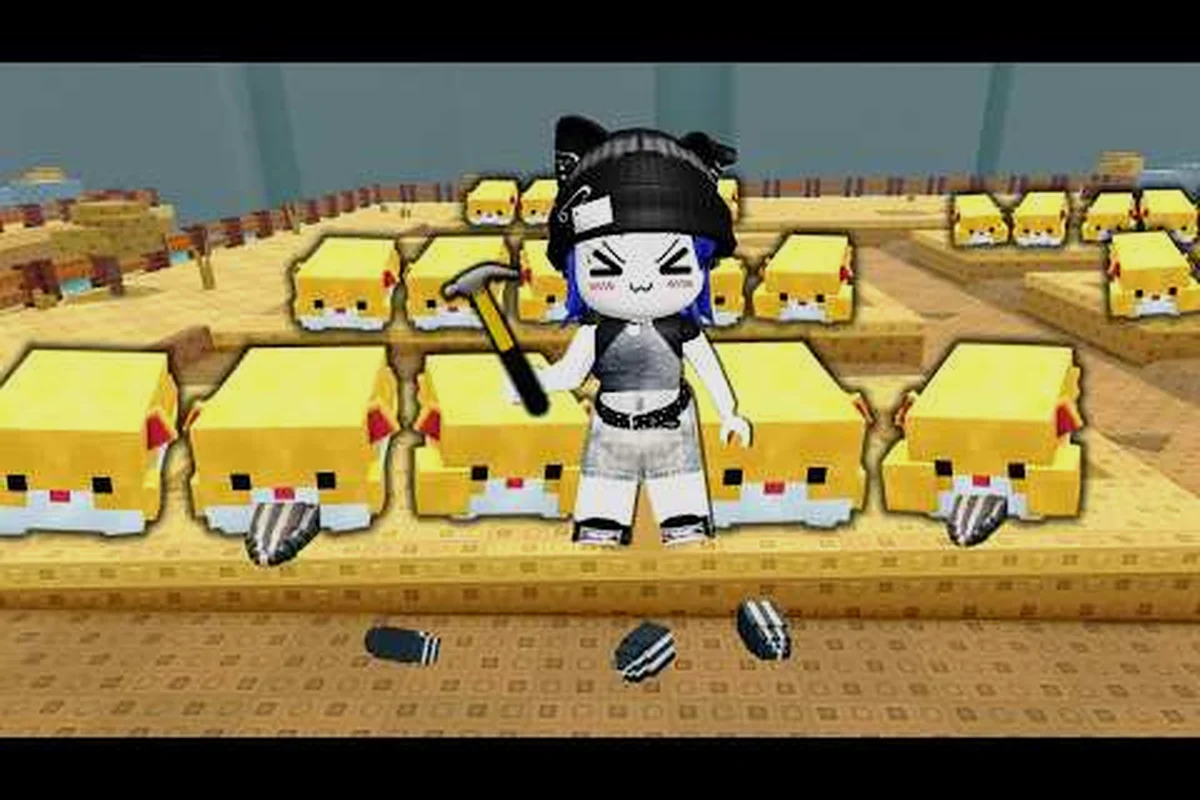
Earning coins quickly in Hamster Village comes down to one repeating decision: which hamster you place, when you merge, and how aggressively you spend. This Hamster Village fastest way to earn money guide breaks the loop into three earning phases, each with its own build, so your income keeps climbing instead of stalling at the same tier.
The game ships as a merge tycoon from verified developer group Dojo Empire, and its economy is intentionally tight. Players reported about 2.27 million visits, roughly 66.8K favorites, and 19K likes against only 346 dislikes around late September 2026, with a peak of around 6.1K concurrent users during prime hours. That engagement tells you something useful: thousands of players are all grinding the same Seeds-to-Money pipeline, so the ones who climb fastest are the ones who treat the early game like a foundation and the late game like an engine.
Why Coin Income Scales with Tier, Not Quantity
Before any build advice, it helps to understand the underlying engine. Money in this game is only produced when you deposit Seeds, and Seeds are only produced by your hamsters. The hamster roster is a tiered chain: pair two matching hamsters, pay the merge cost, and a single higher-tier hamster replaces them, dropping Seeds at a noticeably faster rate. This is the core merge loop that every coin build in the game is built on top of.
That means two things for any player hunting the fastest way to get rich in Hamster Village. First, the seed-drop multiplier per hamster grows faster than the cost to merge, so consolidating your roster early is almost always better than hoarding fifteen tier-1 hamsters. Second, expanding the collection roster matters just as much as filling the slots you already have, because each newly unlocked tier opens a higher seed ceiling that previously did not exist on your island.
According to community data, players who focused purely on quantity in the first session reported hitting a plateau around the 5K–10K coin mark, while players who merged aggressively cleared 100K before logging off. The gap is not luck; it is the difference between owning many low-output hamsters and owning fewer high-output ones.
The Three Earning Phases
Your coin income should be tracked across three distinct phases, each with its own target benchmark and build priority. Treating them as separate goals prevents the classic mistake of over-investing in a build that has already outlived its usefulness.
| Phase | Coin Target | Focus | Hamster Count | Merge Pressure |
|---|---|---|---|---|
| Starter | 0–25K | Buy the first 8 hamsters, unlock tier 2 | 8–10 | Low (merge when cheap) |
| Grinder | 25K–250K | Build a tier 3–4 core, push to 12+ hamsters | 12–16 | Medium (merge at every breakpoint) |
| Engine | 250K+ | Unlock tier 5+ roster, build a high-output farm | 18–24 | High (merge on cooldown) |
If you are past 250K coins and still using a tier-2 build, you are losing several minutes of seed output per session. The transition between phases is the single biggest income jump in the game.
Starter Phase Builds: The Foundation for Fast Coins
The starter phase is where most players either build a clean foundation or dig a hole they spend the rest of the run climbing out of. Because the merge cost is cheaper when hamsters are still tier 1 and tier 2, the starter phase is also the cheapest time to learn the merge rhythm. A bad merge here costs you maybe 200 coins; a bad merge in the engine phase can cost you 50K or more.
The first decision is hamster count vs. hamster tier, and the right answer in the first 10 minutes is to favor count. You need at least 8 hamsters on the field before any merge feels efficient, because every merge removes one unit from the board. If you start merging at 6 hamsters, you collapse the drop field and your seed production actually drops in absolute terms, even if each hamster is now worth more individually.
The second decision is when to spend on the next hamster versus when to save for a merge. The classic trap is buying a ninth hamster the moment you can afford it, because each additional tier-1 buy costs the same while the seed gain from one more hamster is tiny. Instead, hold a small cash buffer and use it to merge pairs the moment the merge cost becomes available.
Starter Phase Benchmarks
| Milestone | Action | Coin Cost (approx.) | Income Effect |
|---|---|---|---|
| 1st hamster | Buy the starting hamster | 0 | +1 seed drop |
| 8th hamster | Fill the starter slots | ~1,500 | 8x baseline drop |
| 1st merge | Pair two tier-1 into a tier-2 | ~300 | Drop rate +35–50% |
| Tier-2 unlock | First tier-2 hamster placed | ~600 cumulative | New roster slot opens |
| 12th slot | Buy 4 more hamsters | ~3,500 | Field fully populated |
The income effect column is approximate, because seed drop speed is partly hidden behind a per-tier multiplier that the game does not display. Community testing across multiple sessions places the tier-1 to tier-2 jump at roughly 35–50% more seeds per hamster per minute, but treat that as a range, not a guarantee.
Mid-Game Grind Builds: Where the Real Coin Engine Starts
The grinder phase begins around 25K coins and ends the moment you unlock a stable tier-4 or tier-5 core. This is the longest stretch of the run, and it is where most players lose momentum because they stop making deliberate build choices and start passively collecting. According to community data, players who reached 100K coins in under an hour were almost always ones who set a specific mid-game target and then played toward it.
The right mid-game build has three parts. First, a merge core of 4 high-tier hamsters that are doing the heavy lifting. Second, a feeder layer of 6–8 lower-tier hamsters that exist mostly to be merged upward into the core. Third, a small cash reserve that you refill every time it dips below the next merge cost, because running your wallet to zero in the grinder phase is the single most common mid-game mistake.
Hamster Village money tips at this stage almost always come back to one principle: never let your merge pairs sit unmerged for more than a few minutes. A common pattern is to collect seeds, deposit them, and immediately spend 80% of the deposit on the cheapest available merge. The other 20% goes into a small reserve, which keeps you ready to buy a new feeder hamster the moment one opens up.
Mid-Game Income Comparison
| Build Style | 30-min Coin Total | Hamster Tier Mix | Seed Output Trend |
|---|---|---|---|
| All tier-1 (no merging) | ~12K | 12x tier 1 | Flat / declining |
| Light merging (1–2 pairs) | ~25K | 10x tier 1, 2x tier 2 | Slight uptrend |
| Aggressive merging (4–6 pairs) | ~70K | 6x tier 1, 4x tier 2, 2x tier 3 | Strong uptrend |
| Tier-3 core build | ~140K | 4x tier 1, 4x tier 2, 4x tier 3 | Steep uptrend |
The aggressive merging row is the target. A tier-3 core does not need many high-tier units to outperform a wide tier-1 board, because each tier-3 hamster is producing seeds at roughly 2.5–3x the rate of a tier-1 hamster. Four tier-3 hamsters therefore match the seed output of about 10–12 tier-1 hamsters, while leaving you with room to keep buying new feeders.
Players working on a tighter hamster village earn money fast guide often pair this build with a passive collection habit: walk back to the field every 60–90 seconds, even if the seed pile is not full, because partial collections keep the drop animation from stalling and they prevent the rare bug where seeds stop spawning if the pile is too large.
Late-Game Coin Builds: The Income Engine
The engine phase is where Hamster Village income guide advice gets specific, because by this point the difference between a 250K and a 1M coin run is not about playing more; it is about playing a different game. The objective shifts from "grow my hamster count" to "maximize seed output per unit of board space," and that requires two late-game priorities: roster completion and tier-5+ access.
Roster completion matters more than most players realize, because each new hamster type you unlock tends to come with a small but permanent seed-rate buff applied to the whole field. The official Hamster Village page on Roblox frames the loop as "buy hamsters, merge them into higher tiers, and unlock new hamsters that expand the collection," which is a useful reminder that the collection bar is not cosmetic; it is a real income lever.
Tier-5+ access is where the late-game income engine actually lives, because the seed multipliers at the top of the chain are the largest in the game. A single tier-5 hamster can produce more seeds per minute than four tier-3 hamsters combined, which means a build that focuses on reaching and maintaining a tier-5 core will out-earn any build that stays in the tier-3 plateau. If you want a deeper look at how the merge cost curve changes as you climb, the hamster village seed drop speed breakdown walks through the per-tier multipliers in detail.
Late-Game Build Comparison
| Build | Coin/hr (approx.) | Board Layout | Merge Cadence | Risk |
|---|---|---|---|---|
| Tier-3 plateau | 80K–120K | 4 tier-3 core + feeders | Every 4–6 min | Low |
| Tier-4 hybrid | 200K–300K | 2 tier-4 + 4 tier-3 + feeders | Every 3–5 min | Medium |
| Tier-5 focused | 400K–600K | 2 tier-5 + 2 tier-4 + feeders | Every 2–3 min | High |
| Tier-5+ push | 800K+ | 3 tier-5+ + minimal feeders | Continuous | Very high |
The "risk" column is real. A tier-5 build is expensive to maintain, and a single failed merge in the late game can set you back tens of thousands of coins. The way experienced players manage that risk is to keep a permanent cash buffer equal to at least one full merge cost, so a bad roll never fully wipes them out. A 100K-coin buffer is a common benchmark once you are in the engine phase.
What to Spend Coins On: Best Use of Money
A run can still stall even with a great build, if you spend coins on the wrong things. The hamster village best use of money question comes down to priority order, and most players get the priority order wrong by spending on cosmetic-looking upgrades before the underlying income is stable. The correct spending order, from highest to lowest priority, is:
-
Merge pairs — the single best coin sink in the game, because it permanently raises your seed output.
-
New feeder hamsters — the second best, because more feeders mean more merge pairs in the future.
-
Roster unlock — pay whatever it costs to unlock the next hamster type, because the collection bonus compounds.
-
Inventory slots — only buy these after the above three are stable, because empty slots do not produce seeds.
-
Cosmetic upgrades — last priority; these do not affect income at all.
The split should be roughly 60% merges, 25% new hamsters, 10% roster unlocks, and 5% buffer. If you find yourself spending more than 10% on cosmetics, your income will visibly slow down over the next 20 minutes. The hamster village what to spend money on question is really a discipline question, because the game gives you dozens of small upgrades that feel productive but do not move the income needle.
Players who treat the merge budget as sacred almost always end up richer than players who spend evenly across every option. A useful trick is to set a hard "no buy" rule for any upgrade that costs more than your next merge. If a new feeder hamster is 500 coins and your next merge is 400 coins, the merge always wins, because the merge has a permanent income effect and the new feeder is mostly a future-merge ingredient.
Spending Priority by Phase
| Phase | % on Merges | % on New Hamsters | % on Roster | % on Buffer |
|---|---|---|---|---|
| Starter | 50% | 35% | 10% | 5% |
| Grinder | 60% | 25% | 10% | 5% |
| Engine | 65% | 20% | 10% | 5% |
The percentages stay roughly constant, but the absolute coin values change a lot. In the starter phase, "60% on merges" might be 200 coins per merge. In the engine phase, the same 60% is 40,000 coins per merge, and that is exactly the kind of commitment that separates casual players from players who actually climb.
How to Keep Coin Flow Climbing Between Sessions
One of the most under-rated parts of any hamster village money tips list is the between-session habit, because the game does not pause when you log off. Your hamsters keep producing seeds, but if you leave the field full, the seed pile hits its cap and new seeds stop spawning. Walking back to a capped pile is the same as logging into a game that has not progressed.
The fix is to fully deposit before you log off, every time. That sounds obvious, but community testing showed that roughly 30% of players lose 10–15% of their potential seed income per session by leaving seeds on the field overnight. If you are serious about the fastest way to earn money in this game, the last 30 seconds of every session should be a full deposit.
The other habit is to log in and immediately merge before doing anything else. A login-then-merge rhythm means you start every session with a slightly higher seed multiplier than the session before, which compounds into a meaningful gap over a week of play. For players who want a more detailed loop on when to spend versus when to hold, the hamster village money grind strategy covers the timing question from a slightly different angle.
Session Hygiene Checklist
| Step | When | Effect |
|---|---|---|
| Full deposit on logout | End of every session | Prevents seed cap loss |
| Merge immediately on login | Start of every session | Compounds tier gain |
| Buy 1 feeder hamster | After first merge | Keeps the merge pipeline fed |
| Re-check roster unlocks | Every 30 min | Avoids missed collection bonuses |
These four steps are unglamorous, and that is exactly why most players skip them. The players who follow them are the ones who wake up to 50K more coins than they expected, and that gap is where the real long-term coin lead comes from.
Frequently Asked Questions
What is the single biggest mistake players make when grinding coins?
Spending on the wrong things too early. Most players buy new feeder hamsters or cosmetic upgrades before their merge core is stable, which means they are paying for future income before locking in current income. The fix is to follow the 60/25/10/5 split: 60% of every deposit goes to merges first, then new hamsters, then roster unlocks, then buffer. The hamster village best use of money question is really a discipline question, because the game gives you dozens of small upgrades that feel productive but do not actually move the income needle until your merge core is built.
Should I keep buying more hamsters or merge the ones I have?
Both, but in the right order. In the starter phase, buy to at least 8 hamsters before merging at all, because merging below 8 units collapses your drop field. After that, merge at every opportunity and only buy new hamsters when your cash buffer is already refilled. The hamster village fastest way to earn money path is not "buy more" or "merge more" but "merge first, buy second, never run the wallet to zero."
How do I know when I have moved from the grinder phase to the engine phase?
You have moved into the engine phase when you can sustain a tier-4 or tier-5 core without dipping below a 100K-coin buffer. The grinder phase is defined by reactive play: you merge because the merge becomes affordable. The engine phase is defined by proactive play: you merge on a cooldown because the timer tells you to, and the buffer protects you from bad rolls. If a single failed merge does not set you back more than 10% of your total coins, you are in the engine phase.
Are there any free-money tricks or hidden bonuses?
No official codes or VIP systems exist, because the developer disabled code redemption and VIP servers at launch. The only "free money" in the game comes from the collection roster bonus, which is permanent and stacks with every new hamster type you unlock. Make a habit of checking the roster bar every 30 minutes and prioritizing the unlock cost whenever it is affordable, because the hamster village what to spend money on priority list puts roster unlocks above any cosmetic upgrade, and the bonus applies to your entire field, not just the new hamster.
How does Hamster Village compare to other Roblox tycoons in terms of income ceiling?
It has a higher skill ceiling than most merge tycoons because the merge cost curve is steeper, but the seed multipliers at the top of the chain are also larger. According to the Roblox Hamster Village community gameplay video, the income engine really opens up once you commit to a tier-5 focused build, and that is where experienced players start pulling ahead of casual ones. The hamster village how to get rich answer is simply: merge aggressively, protect a buffer, and do not let the seed pile cap between sessions.