
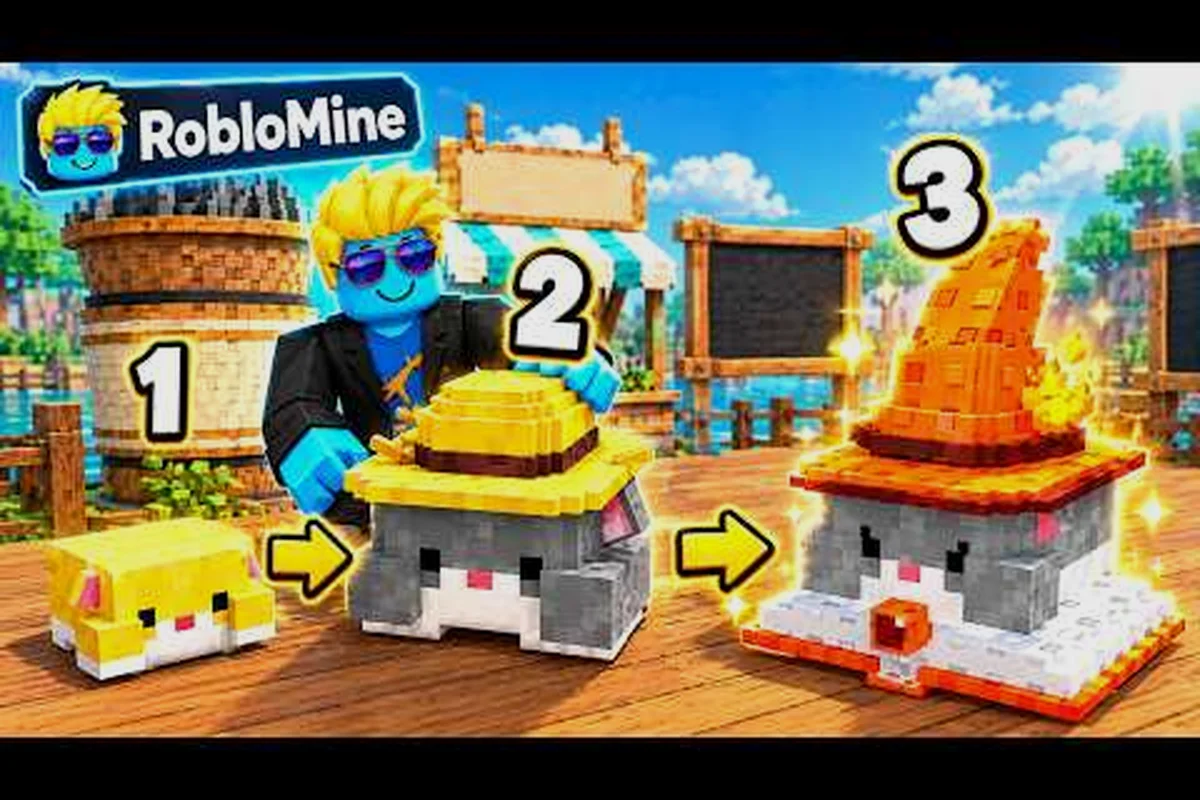
Merging is the single fastest progression lever in Hamster Village, and the order in which you combine pairs decides how quickly new hamsters join your roster. The right sequence turns two low-tier producers into one stronger dropper, while the wrong sequence leaves you with cramped pens and wasted money. This guide maps the hamster village best merge order from your first 60 seconds to late-game collection pushes, so every Seeds deposit converts into the next tier as efficiently as possible.
Why Merge Order Matters More Than Buying Speed
Hamster Village runs on a tight loop: buy a hamster, collect its Seeds, deposit Seeds for Money, then spend Money on more hamsters or merges. According to the official Hamster Village page on Roblox, higher-tier hamsters drop Seeds noticeably faster than their predecessors, and the act of merging is what pushes you into those tiers in the first place. That is why the hamster village best merge order is not just a cosmetic preference — it is the core income multiplier for your run.
Community data, captured in a public Hamster Village merge order walkthrough on YouTube, shows that a merged higher-tier hamster replaces two lower ones but out-produces them on a per-minute basis. In practical terms, that means your income curve bends upward every time you successfully merge, while buying fresh lower-tier hamsters only flattens the curve. Players who fixate on buying speed end up with a wider pen but a slower Seeds trickle, because each new purchase is a tier-1 producer.
There are three reasons the order matters specifically. First, the hamster village merge unlocks depend on adjacent tiers: a tier-3 pair cannot merge unless you already own at least two tier-3 hamsters. Second, hamster village merge rewards are front-loaded — early merges give the biggest income jump relative to cost. Third, when the hamster village merge new hamsters step activates, your collection roster expands and you start producing Seeds from a wider variety of animals, so locking in a clear order prevents the panic-buy that stalls progress.
| Action | Income Effect | Pen Slot Cost | Early-Game Verdict |
|---|---|---|---|
| Merge two tier-1 hamsters | +35–50% Seeds/min vs. keeping both | -1 slot | Strongest move |
| Buy a fresh tier-1 hamster | Baseline Seeds/min | +1 slot | Use only when you have empty slots |
| Buy a higher-tier hamster from the shop | Higher Seeds/min but very expensive | +1 slot | Skip until mid-game |
| Skip merging (hold duplicates) | 0 income change | 0 slot change | Waste of a merge opportunity |
The table above captures the four decisions you will make hundreds of times per session, and it frames every later section: the hamster village best merge order is the path that converts duplicate slot usage into upward income steps rather than horizontal slot creep.
Reading the Merge Chain From Bottom to Top
Before sequencing, you need a clear picture of the merge chain itself. Each hamster in the game belongs to a tier, and matching pairs of the same tier collapse into the next tier up. The chain runs from the cheapest starter hamster all the way to the rarest collection hamsters, and hamster village merge unlocks gate the next tier until the previous one is fully merged at least once.
| Tier Group | Approx. Cost Range | Seeds/Min Indicator | Merge Unlock Target |
|---|---|---|---|
| Tier 1 (starter) | Cheapest buys | 1x baseline | Tier 2 hamster |
| Tier 2 | Low | ~1.4–1.6x | Tier 3 hamster |
| Tier 3 | Mid | ~2.0–2.4x | Tier 4 hamster |
| Tier 4 | High | ~3.0x | Tier 5 hamster (often a collection hamster) |
| Tier 5+ | Premium / event | 4x+ | Collection milestone + new roster entry |
The exact numbers shift with each update, since the developer pushes changes during server shutdowns and treats those windows as release points. Community trackers report roughly a 40–60% Seeds-per-minute uplift on every successful tier-1 to tier-2 merge, dropping to around 30% by the time you reach tier 4. That tapering is exactly why the hamster village best merge order front-loads the cheap merges and slows down once you are already sitting on a healthy tier-3 base.
A second mechanic worth internalising is that the hamster village merge new hamsters event triggers when a previously unseen tier enters your collection. You can see this both as a "new hamster" notification and as a permanent addition to the collection book. Because the first time you unlock a new tier is the moment that hamster enters the roster, the hamster village best merge order is really a sequence of "first unlocks" — each step should be the cheapest path to the next first-unlock tier.
Starter Tier Strategy
At the start of every run, you are broke, your pen is nearly empty, and your only meaningful action is buying the cheapest hamster available and merging it with itself. The starter tier strategy is therefore: buy two tier-1 hamsters, merge them, and repeat. Do not buy a third tier-1 hamster until you have already produced your first tier-2, because a third tier-1 in the same pen is a missed merge.
Once you have one tier-2 hamster, your Seeds-per-minute jumps by roughly 40–50%, and your Money income accelerates as a direct result. That is the hamster village merge rewards loop in miniature: pay a small cost now, harvest a larger Seeds trickle later, and use the larger trickle to fund the next merge. Players who try to buy higher-tier hamsters from the shop before they have a working tier-2 base almost always report feeling stuck, because their Money income never catches up to the shop's price curve.
When to Pause Merging
There are exactly two situations in which you should pause merging. The first is when you only own one copy of a given tier. Merging requires two identical hamsters, and selling or losing the second copy leaves you stranded. The second is when the next merge would consume your last empty slot. You always want at least one free pen slot so a freshly bought hamster has somewhere to land, and the hamster village should i merge hamsters decision collapses to: yes, if you have two of the same tier and a free buffer slot; no, otherwise.
| Situation | Should You Merge? | Why |
|---|---|---|
| You own two tier-1 hamsters and a free slot | Yes | Maximum income uplift, minimal risk |
| You own one tier-2 hamster and one tier-1 hamster | No | Pair mismatch — keep buying tier-1 |
| You own two tier-3 hamsters and no free slot | No | Buy a cheap filler first to free the slot |
| You just unlocked a new collection hamster | Yes | First-unlock merges are the strongest hamster village merge rewards |
The pause rule also protects you from overcommitting. If you burn through your last Money to force a merge you cannot afford to repair, the next server shutdown rolls in and your session restarts with a weaker baseline. Disciplined players keep a small Money reserve — community reports suggest roughly 20–30% of current cash — so a bad merge can be undone.
The Core Merge Sequence: Tier 1 to Tier 4
The hamster village best merge order, as captured by community testing and walkthrough videos, follows a tight ladder. You start by stacking tier-1 merges, then hold each new tier long enough to buy a duplicate, then push to the next tier. Skipping ahead rarely pays off because the income to fund a tier-4 buy has to come from a stable tier-3 production base.
| Step | Goal | Action | Approx. Money Spent |
|---|---|---|---|
| 1 | Build a tier-2 base | Merge 2× tier-1 → tier-2, repeat 2 times | Lowest tier prices |
| 2 | Push to tier-3 | Merge 2× tier-2 → tier-3 | Low-mid spend |
| 3 | Stabilise tier-3 | Buy 1 extra tier-3 to enable future merges | Mid spend |
| 4 | First tier-4 unlock | Merge 2× tier-3 → tier-4 | High spend |
| 5 | Reset cycle | Begin again at tier-1 with the new income curve | N/A |
Step 1 looks deceptively simple, but the discipline of repeating it twice in a row is what separates a smooth run from a stalled one. Most players merge once, get distracted by the new tier-2 hamster, and forget to merge a second time. Two tier-2 hamsters are the prerequisite for the step 2 push, so the hamster village best merge order treats step 1 as a 2x sub-task rather than a single action. If you are unsure which tier-1 hamster to start with, the hamster village hamster ranking guide maps every starter option to a clear production profile.
Step 2 is the first major money sink of the run. Tier-2 merges cost more than tier-1 merges, and you need to keep enough Money in reserve to repair mistakes. Once you have one tier-3 hamster, do not rush to buy a second; instead, park the Money for a moment and let the tier-3 hamster's Seeds trickle refill your wallet. That refill is the hamster village merge rewards in action: a higher tier pays for its own duplicate.
Step 3 is the part most guides skip. Buying a second tier-3 hamster before you have a free Money buffer is the single most common stall point. Wait until your wallet holds at least the cost of a tier-3 plus a 20% buffer, then buy. After the purchase, immediately merge with your existing tier-3 to push into step 4.
Step 4 is the payoff. Merging two tier-3 hamsters into your first tier-4 is the moment the hamster village merge new hamsters event fires, and the new collection entry is a permanent upgrade to your roster. Some players also unlock a cosmetic or title reward at this milestone — the exact hamster village merge rewards table is updated by the developer each cycle, so expect occasional shifts.
Step 5 is the reset. Once you have one tier-4 hamster, your Seeds-per-minute is roughly 3x the starting rate, and you can fund another full lap of the tier-1 to tier-4 cycle without much effort. That is why the hamster village best merge order is best read as a recurring loop rather than a one-time ladder.
Handling the Tier-4 Plateau
Tier 4 is where most players plateau, because the next merge is genuinely expensive. According to community data, a tier-4 to tier-5 push can cost several times more than the entire tier-1 to tier-4 sequence combined. That is intentional: the developer wants players to sit on a strong tier-4 base and let hamster village merge unlocks arrive naturally through duplicate accumulation rather than forced spending.
| Plateau Symptom | Recommended Fix |
|---|---|
| Cannot afford tier-5 merge | Keep two tier-4 hamsters and let Seeds accumulate |
| Pen is full of mismatched tiers | Sell the lowest-tier hamster that has a duplicate already merged |
| New collection hamster is gated | Continue merging your lowest available duplicate pair |
| Money income flatlines | Merge any duplicate pair you own, even if it is a low tier |
The plateau fix list is essentially a "keep merging" rule. Every duplicate pair you own is a hamster village merge rewards opportunity waiting to fire, and selling the wrong hamster is one of the few irreversible mistakes in the game. If a hamster has no duplicate, it is part of your income engine and should not be sold.
Merge vs Buy: When Each Choice Wins
The hamster village merge vs buy question is the most common decision players face after the first 10 minutes, and the right answer changes with your wallet and your tier mix. Merging is the default because it amplifies income per slot, but buying is sometimes correct when the shop offers a hamster you cannot easily merge into.
| Scenario | Better Choice | Reason |
|---|---|---|
| You own 2× of the lowest available tier | Merge | Largest relative Seeds uplift |
| Shop offers a tier above your current best | Buy only if Money > 3x the cost | Avoids draining your merge fund |
| You need a specific type for collection | Buy | Merges do not guarantee a target type |
| You are about to run out of slots | Merge | Frees a slot for the next buy |
| You are chasing hamster village merge new hamsters | Merge | First-unlock merges are guaranteed rewards |
The middle row is the trap. A tempting shop hamster can look like a shortcut, but pulling Money out of your merge fund usually means you will be unable to finish your current tier pair, which delays the hamster village best merge order by an entire cycle. Reserve buying for moments when the shop directly solves a gap — for example, when you need a specific collection entry that your current pair cannot produce. The hamster village best buy list catalogues the shop hamsters that are worth a Money swing.
The bottom row is the meta-decision. Hamster village merge rewards are guaranteed the moment two identical hamsters collide, so merging is the only action that simultaneously increases income, frees a slot, and progresses your collection. Buying is a side quest; merging is the main quest.
Common Buy Mistakes to Avoid
Players new to the merge vs buy split tend to overspend in the first 15 minutes. The two most common mistakes are buying a hamster that duplicates one you already own (which would have been free via merging if you had waited one more cycle) and buying a higher-tier hamster before you can afford to merge it with a duplicate. Both mistakes are recoverable, but they cost you 10–20 minutes of progression each.
| Mistake | Cost | Fix |
|---|---|---|
| Buying a hamster you already own | Wasted Money, lost shop slot | Sell the new copy if you do not need a merge pair |
| Buying a tier you cannot yet duplicate | Money drain, idle hamster | Let it produce Seeds until you can buy a second |
| Buying during a server shutdown | Lost Money, no progress | Wait for the post-update reset |
That last row matters because the developer treats server shutdowns as update windows. Community reports confirm that any Money or progress held at the moment of shutdown can be lost, so the safe play is to spend down your wallet on merges before the next shutdown lands. If you time your last merge of the session to a tier you actually need, you start the next session with the hamster village best merge order already one step ahead.
Advanced Sequencing for Collection Pushers
Once you have a stable tier-4 base and a steady Seeds trickle, the hamster village best merge order shifts from "push income" to "complete the collection." Collection pushers care less about per-minute Seeds and more about unlocking every hamster in the roster, which means sequencing merges to hit specific first-unlock tiers as cheaply as possible.
| Collection Goal | Cheapest Merge Path | First-Unlock Reward |
|---|---|---|
| Unlock the first rare hamster | Tier-3 → tier-4 push | Collection entry + bonus Seeds trait |
| Unlock a second rare hamster | Tier-4 → tier-5 push (if affordable) | New cosmetic or title |
| Fill the collection book | Merge every duplicate pair you own | Permanent collection completion badge |
| Catch up after a long break | Reset to step 1 of the core sequence | Income rebound |
The cheapest merge path for the first rare hamster is almost always the tier-3 to tier-4 push described in the previous section, because the Seeds you banked from a stable tier-3 base make the second tier-3 affordable. The hamster village should i merge hamsters question at this stage flips to "should I save for a tier-5?" and the answer depends entirely on your Money buffer. Players who are also tracking the hamster village S-tier ranking will notice that several collection hamsters cluster in the upper tiers, so the buffer matters more than the speed.
For the second rare hamster, the path is identical but the cost is higher. Most players do not push to tier-5 until they have two tier-4 hamsters producing simultaneously, which means letting the hamster village merge new hamsters cycle run twice at tier-4 before attempting the upgrade. The hamster village merge rewards at this stage are slower but larger, so the patience tends to pay off in long-session value.
The collection book is a self-contained mini-game. Each hamster you unlock contributes to a permanent completion percentage, and the final entry usually rewards a cosmetic or a small permanent Seeds multiplier. The cheapest way to fill it is to merge every duplicate pair you own, even low-tier ones, because every merge has a small chance of producing a hamster you have not yet seen. The hamster village best merge order for collection completion is therefore the same as the income order, with the extra rule: never sell a hamster whose duplicate is in your pen, even if it is a low tier.
Catching Up After Time Away
Returning players often find that a new patch has shifted the merge chain. The fix is to ignore the new content for the first 30 minutes and rerun the core sequence from step 1. By the time you are back at tier-4, the new content has had time to settle in the community and you can read patch notes with a clear baseline. The hamster village what to prioritize guide is a useful companion for catching up, because it frames the early-session decisions in a way that holds across updates.
A second catch-up tip is to dump your Money into merges right before a server shutdown. If the update increases merge efficiency, you want your pre-update merges in the bank. If the update does not, you have lost nothing because the Money would have been reset anyway. Either way, the hamster village best merge order at session close is "spend it on a guaranteed merge," not "save it for a hypothetical shop hamster."
Frequently Asked Questions
What is the hamster village best merge order for the first 10 minutes?
Start by merging two tier-1 hamsters, then repeat to build a second tier-2. Use your first tier-2 to bank Seeds, then merge the two tier-2 hamsters into your first tier-3. This sequence front-loads the largest income uplifts and keeps your Money buffer healthy for the rest of the run.
Should I merge hamsters or buy new ones when the pen is full?
Merge first. Every duplicate pair is a guaranteed Seeds uplift and a free pen slot, while buying only adds another hamster that needs a duplicate before it can be merged. The hamster village merge vs buy answer is "merge, then buy a cheap tier-1 filler if you still have a slot."
How do hamster village merge unlocks work?
Each successful merge of two identical hamsters produces the next tier up, and the first time you produce a given tier, that hamster joins your collection book. Hamster village merge new hamsters entries are permanent, so even if you sell the hamster later, the collection record stays.
What are the hamster village merge rewards for hitting tier-4?
The tier-4 unlock usually triggers a new collection hamster, a Seeds-per-minute multiplier, and sometimes a cosmetic. Hamster village merge rewards shift with each update, but the tier-4 milestone is consistently one of the biggest single jumps in the run.
Can I skip tiers by buying a higher hamster from the shop?
You can, but it is rarely worth it. Buying a tier-3 or tier-4 hamster before you can afford to duplicate it leaves you with a single high-tier producer and no merge path, which stalls your income curve. Stick to the hamster village best merge order and let the shop be a side option, not a shortcut.